



-
 Commercial
 -
 0 Comments
Understanding the Pros and Cons of Various Commercial Roofing Materials
Choosing the suitable roofing material for commercial buildings is a significant decision that affects not just the aesthetic appeal, but also the durability, maintenance, and long-term costs of the structure. As such, understanding the various options available in the market today, as well as their advantages and drawbacks, is crucial.
This comprehensive guide intends to help property owners and managers make an informed decision by providing a detailed comparison of a wide range of commercial roofing materials and their navigations.
The Importance of Choosing the Right Roofing Material
Choosing a suitable roofing material is crucial for the performance of a commercial building. The material affects not only the durability and longevity of the roof but also influences energy savings and maintenance costs. From energy efficiency to weather resistance, the impact of a roofing material is far-reaching, affecting both operational expenses and the roof’s overall lifespan.
Understanding Various Types of Commercial Roofing Materials
Many roofing materials are available in the market, each with unique advantages and disadvantages. Knowing their ins and outs can adequately prepare facility managers and property owners to make an informed choice tailored to their specific needs.
Here are some of the most common commercial roofing materials, along with their advantages and disadvantages:
Metal Roofing
Metal roofing is a type of roofing system made from metal materials, typically aluminum, steel, copper, or zinc alloys. It is known for its durability, longevity, and resistance to various environmental conditions. Metal roofing can come in multiple styles, including standing seam, corrugated, and metal shingles, offering versatility in design and appearance.
Metal roofing materials boast exceptional durability and can last up to 40 years or more with minimal maintenance. They resist high winds, are impact-resistant, and do not corrode or crack. This long lifespan makes them an excellent investment for commercial buildings.
However, metal roofing tends to be more expensive per square foot than many other commercial roofing materials and is noisier during heavy rain or hailstorms. Fortunately, its longevity and energy savings offset the upfront cost of metal roofing. Its reflective properties can lower cooling costs, and its durability reduces maintenance expenses.
Modified Bitumen Roofing
Modified bitumen roofing is a type of roofing system that combines the durability and waterproofing properties of traditional asphalt roofing with added modifiers to enhance performance and flexibility. It is commonly used in low-slope or flat-roof applications for commercial and industrial buildings.
The material and installation costs for modified bitumen roofing are more affordable than other options. Its durability and easy repairability make it a cost-effective choice for commercial buildings. With a lifespan of 15 to 20 years, modified bitumen roofs offer a reliable solution with easy repair and maintenance options. Regular checks and maintenance can significantly extend their service life.
This type of commercial roofing material is easy to install, offers superior flexibility in cold temperatures, and has high tensile strength. However, it is also susceptible to scuffing and can be less effective in extreme temperatures.
EPDM Roof Membrane
EPDM roofing, a type of synthetic rubber, is known for its superior durability and flexibility, making it ideal for regions with extreme weather conditions. However, the black surface can absorb heat, and seams are vulnerable if not correctly installed. It is also more susceptible to punctures from sharp objects than other materials.
EPDM roof membranes can last over 30 years with proper installation and maintenance. Their resilience against harsh weather conditions and UV rays makes them an enduring option for commercial roofing. Though the initial cost may be higher than some alternatives, the long-term savings through energy efficiency and minimal maintenance needs make EPDM a cost-effective choice for commercial properties.
Thermoplastic (TPO) Roof Membranes
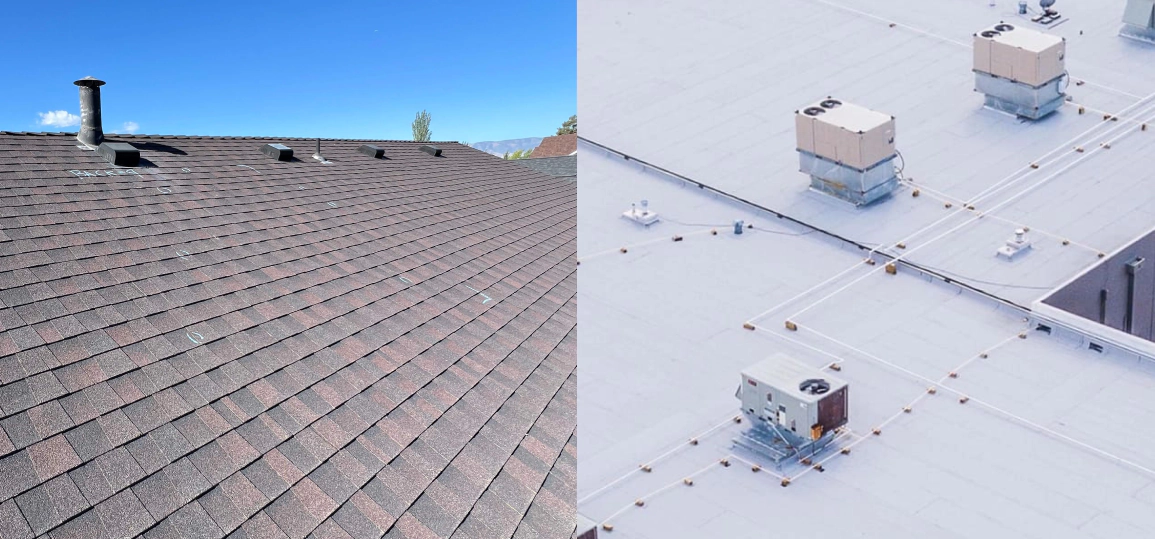
TPO (Thermoplastic Polyolefin) roofing systems are a type of single-ply roofing membrane widely used in commercial and industrial roofing applications. TPO roofing membranes are made from a blend of polypropylene and ethylene-propylene rubber, reinforced with polyester or fiberglass scrim for added strength and stability.
TPO roofs have a lifespan of 20 to 30 years, combining the durability of EPDM roofs with the energy efficiency of a white reflective surface. Regular inspections and maintenance can further extend their life. Though the initial installation cost is higher, the energy savings and durability of TPO roofing make it an affordable option over the roof’s lifespan. TPO’s energy-efficient qualities can significantly reduce cooling costs, but it suffers from drawbacks similar to EPDM roofing, including susceptibility to potential punctures, seam failure, and membrane shrinkage.
Asphalt Shingle Roofing
Although more commonly associated with residential buildings, asphalt shingle roofing can also be used on some commercial structures. Asphalt shingle roofing for commercial buildings typically involves the installation of architectural or dimensional asphalt shingles, which offer enhanced durability and aesthetics compared to traditional three-tab shingles.
This roofing option comes in various affordable colors and styles that are easy to install. With proper maintenance, asphalt shingles can last 20–30 years. Their performance is highly reliable, but they require vigilant upkeep to mitigate the risk of damage from extreme weather conditions, such as wind uplift. The accessible price point of asphalt shingles makes them an appealing option for many commercial buildings, though they may require more frequent replacements than other materials.
Red Peaks Roofing works with numerous types of commercial roofing materialsto ensure your facility is properly protected, aesthetically pleasing, and energy-efficient.
Factors to Consider When Choosing a Commercial Roofing Material
The choice of roofing material is critical for a commercial building. It protects the structure from the elements and plays a significant role in the building’s energy efficiency, aesthetics, and overall maintenance costs. Let’s explore the key factors to make an informed decision.
Roofing Material Durability
The durability of commercial roofing materials is the first line of defense against the elements. Materials like metal roofing and spray foam offer longevity and can withstand harsh weather. Durability ensures that the roof system remains effective for a long time, reducing the need for frequent repairs and replacements.
Long-lasting materials, such as EPDM roofing, are known for their resilience and can last up to 50 years with proper maintenance. The choice roof contractor group always recommends considering the durability of roofing materials as it directly impacts the longevity of the commercial roofing system.
Installation Complexity and Building Structure
The complexity of installing different commercial roofing types can vary greatly. For example, a fully adhered EPDM roof system might be more complex to install on a roof with numerous penetrations and a unique shape. The structure of the building heavily influences the choice of roofing material.
Roofing contractors recommend considering the existing structure to determine the most suitable roofing system. Metal roofs and edge metal installations require precise measurements and techniques, affecting the project timeline and cost.
The Climate
Climate plays a pivotal role in the selection of commercial roofing materials. Buildings in areas experiencing heavy rainfall might benefit from asphalt rolled roofing or systems with a top layer designed for water resistance. On the other hand, metal roofing can be an excellent choice for regions with heavy snowfall, due to its durability and the ease with which snow slides off.
Light-colored or reflective roof coatings can contribute to energy savings by keeping the building cooler for hot climates. SPF roofing and green roofing systems are known for their excellent thermal insulation properties, making them suitable for various climate conditions. Consulting with a commercial roofing contractor about the local climate can help you choose a roofing material that will perform well under the specific environmental conditions of the area.
Cost and Maintenance Requirements
The initial cost of roofing materials can vary significantly, from relatively inexpensive options like modified bitumen to more costly solutions like green roofing systems. It’s essential to consider both the upfront costs and the long-term savings associated with energy efficiency, durability, and maintenance needs.
A good maintenance program is essential for prolonging the lifespan of a commercial roof. Regular maintenance can identify and address issues like leaks or damage to cover boards early on, preventing more severe problems that could lead to costly repairs or replacements.
Roofing materials like EPDM and TPO membranes offer relatively low maintenance requirements, making them attractive options for commercial buildings looking to minimize long-term costs.
Making the Right Roofing Material Choice for Your Commercial Property
Choosing a commercial roofing material requires careful consideration of durability, installation complexity, climate, cost, maintenance needs, and eco-friendliness. By evaluating these factors, facility managers and property owners can make an informed decision that balances performance with cost-effectiveness and environmental responsibility.
Ultimately, the right roofing material choice safeguards the property, contributes to energy savings, and supports the longevity and sustainability of the commercial building. Consulting with experienced roofing contractors can provide valuable guidance and ensure that the selected roofing material meets the specific needs of the commercial building—this is where Red Peaks Roofing excels.
Secure the Ideal Materials for Your Commercial Building With Red Peaks Roofing
Red Peaks Roofing stands as a beacon of reliability and quality in the commercial roofing industry, offering high-quality roofing materials and the expertise and services necessary to ensure the longevity and efficiency of your facility’s roof. Our commitment goes beyond material supply; we possess the skills and resources to provide comprehensive maintenance and inspection services, ensuring that your roof remains in optimal condition throughout its lifespan.
With a focus on excellence and attention to detail, Red Peaks Roofing is your trusted partner in safeguarding the integrity and functionality of your commercial roof, delivering peace of mind and long-term value to your business.
Reach out to Red Peaks Roofing for unmatched quality, reliability, and service in commercial roofing solutions.

